
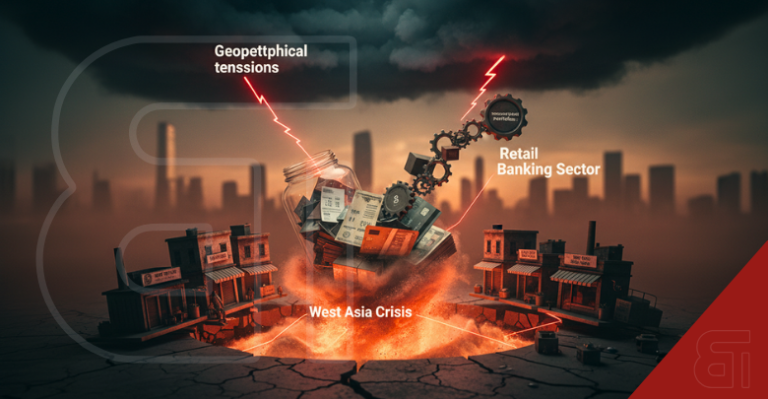
The ongoing West Asia conflict poses a significant threat to Indian banking asset quality and MSME stability.
Global trade route disruptions are actively reshaping the Indian banking landscape. Consequently, financial experts are monitoring ongoing West Asia tensions. The conflict initially affects smaller supply-chain businesses. Subsequently, this stress will likely spill into unsecured retail portfolios.
India relies heavily on regions near the Strait of Hormuz. Therefore, delayed shipments directly impact domestic energy supplies. Higher oil prices naturally increase inflation across various economic sectors. Furthermore, this dynamic threatens to widen the national current account deficit. Large corporations generally maintain enough financial cushion for such shocks. However, marginal players face immediate liquidity risks from these global uncertainties.
Analysts at ICRA anticipate noticeable transmission of these financial pressures. The rating agency expects the credit card and microfinance segments to experience volatility. Meanwhile, personal loan portfolios remain highly susceptible to supply chain shocks. Retail cash flows invariably depend on the health of underlying businesses. Thus, distress in support sectors ultimately hurts individual consumer repayment capabilities.
Prolonged geopolitical instability could severely broaden systemic economic impacts. Practically all commercial operations require consistent and affordable energy supplies. Consequently, rating experts have officially revised real GDP growth forecasts. India might only see 6.5 per cent growth during FY27. Earlier estimates confidently predicted a much higher 7.1 per cent expansion.
This adjustment assumes crude oil stabilises around USD 85 per barrel. Interestingly, nominal GDP growth might reach 10.5 per cent through inflation. Asset quality pressures will build gradually throughout the banking ecosystem. Exact non-performing asset figures remain difficult to calculate currently. Everything depends entirely on the duration of the international conflict.
Banking slippage ratios currently hover near 1.5 per cent overall. Moreover, prolonged distress could push these figures towards 2.5 per cent. Private sector banks are already witnessing a slight uptick in defaults. They carry greater exposure to vulnerable unsecured retail and MSME segments. Nevertheless, the overall banking asset quality appears relatively comfortable today. Gross non-performing assets should inch up only marginally by March 2027. Sector profitability might moderate slightly, but it remains at healthy levels.
(Source: ET – BFSI)
Read more on Banking News by heading to the 🔗 link.


