
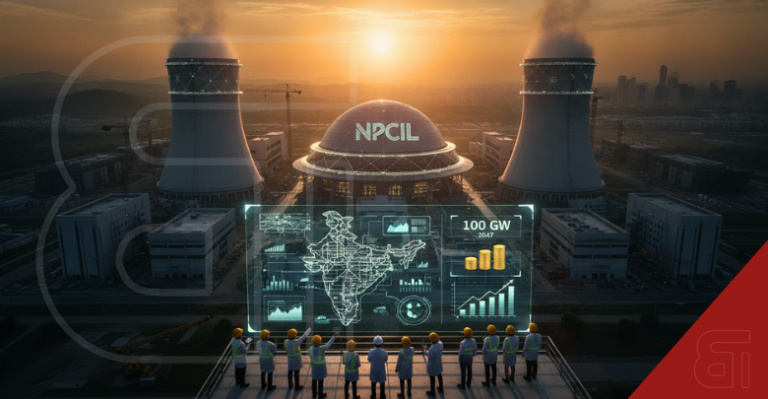
Seeking massive financial autonomy, NPCIL aims to streamline operations to meet India’s 100 GW nuclear target by 2047.
NPCIL seeks greater financial autonomy to overcome regulatory hurdles & hit India’s 2047 nuclear targets.
India plans to generate 100 gigawatts of nuclear energy by 2047. The sector urgently requires faster administrative procedures. The Nuclear Power Corporation of India Limited seeks greater financial freedom.
This state-owned enterprise wants powers similar to Maharatna companies. Currently, the Department of Atomic Energy controls the organisation. Therefore, securing board-level independence could drastically speed up vital decision-making.
A parliamentary committee recently reviewed these operational demands. The group noted that policy bottlenecks currently hinder progress. Furthermore, repetitive design clearances often cause severe project delays.
Prolonged environmental consent procedures also inflate overall construction costs. Thus, the committee recommended granting extensive financial autonomy. They argued this shift is essential for the 2047 vision.
The atomic energy department acknowledged these recommendations. However, officials provided no specific timeline for implementation. The corporation also requested the restoration of mega-project tax waivers.
Additionally, they want regulators to classify nuclear power under green taxonomy. This change would align financial incentives with renewable energy. Meanwhile, lawmakers highlighted the need for better state government participation.
Regional cooperation remains crucial for land acquisition & infrastructure development. The panel suggested improving local employment frameworks. They also emphasised protecting communities & boosting female participation.
Effective state-level dispute resolution mechanisms are now highly necessary. Moreover, lawmakers advised enhancing the availability of nuclear liability insurance. Ultimately, these structural reforms should accelerate new plant commissioning.
Rapid deployment will support national energy security goals. Subsequently, India can better fulfil its net-zero emission commitments. Such systemic upgrades promise a modernised nuclear energy landscape.
(Source: Business Today)
Read more on Business News by heading to the 🔗 link.


