Bad loan acquisitions jump to ₹26,304 crore as banks aggressively clear historic stressed assets.
Asset reconstruction companies significantly increased their bad loan acquisitions amidst improving banking sector health.
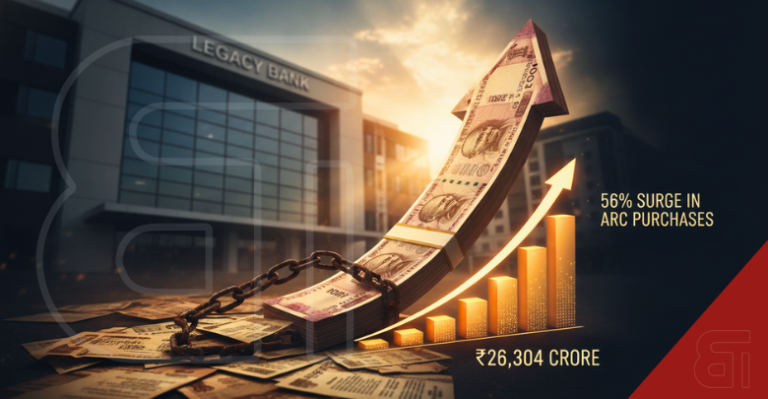
Indian banks are aggressively clearing historic debts from their balance sheets. Consequently, asset reconstruction firms have witnessed massive business growth. These companies acquired ₹26,304 crore of bad loans during the June quarter. This marks a massive 56 per cent increase from the previous year.
Data from the Association of ARCs confirms this rapid acquisition pace. Previously, these firms purchased troubled assets worth ₹16,876 crore in the same period last year. Furthermore, the latest figure nearly doubles the ₹13,852 crore recorded in the first quarter of financial year 2025.
This surge happens alongside significant improvements in overall banking asset quality. Therefore, the gross non-performing asset ratio across the system dropped remarkably. It fell to 1.8 per cent in financial year 2026 from 2.8 per cent in 2024. Lenders are clearly finding success in resolving legacy stressed assets.
These older financial burdens explain the paradox of rising loan sales. Bad loan ratios are broadly declining across the entire banking ecosystem. However, institutions remain highly motivated to offload their oldest problematic accounts. Financial experts suggest official figures might not show the complete picture.
A recent white paper by the Great Lakes Institute of Management highlights this complex reality. Researchers noted that gross bad loans fell to 2.2 per cent in 2025. This drop from 11.2 per cent in 2018 occurred partly due to substantial write-offs. Consequently, the system experienced fewer fresh defaults.
By March 2025, active bad loans reached ₹4.32 lakh crore. Meanwhile, historically written-off loans amounted to a staggering ₹7.88 lakh crore. Therefore, researchers calculated the total stressed-loan stock at an estimated ₹12.20 lakh crore.
Additionally, changing deal structures have heavily influenced these recent transaction volumes. Buyers are increasingly settling these massive acquisitions using immediate cash payments. Sometimes, they structure deals through security receipts alongside higher cash proportions. Ultimately, this upfront liquidity makes the offloading process highly attractive for banks.
(Source: BFSI)
Read more on Banking News by heading to the 🔗 link.