OPEC+ members are positioned to endorse another modest oil output increase for December, continuing their deliberate approach to reclaiming market share.
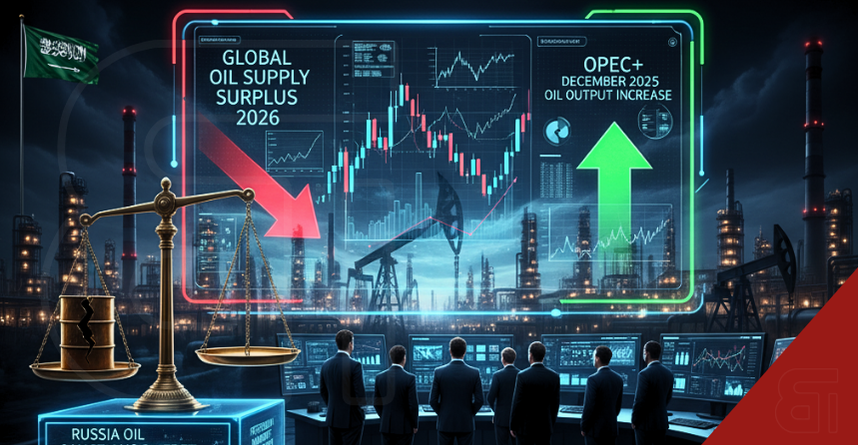
The eight-member coalition, which includes Saudi Arabia, Russia, the United Arab Emirates, Iraq, Kuwait, Oman, Kazakhstan, and Algeria, is expected to approve an increase of 137,000 barrels per day in production targets. This measured expansion reflects strategic calculations balancing growth ambitions against looming supply surplus predictions for 2026.
Since April 2025, the coalition has progressively increased output targets. Overall production gains now exceed 2.7 million barrels daily, representing approximately 2.5% of the worldwide crude supply. However, the group deliberately decelerated its pace significantly during October and November. The recent incremental increases remained fixed at 137,000 barrels daily, down substantially from earlier, larger monthly adjustments undertaken earlier in the year.
Geopolitical complexities increasingly shape OPEC+ deliberations. New Western sanctions targeting Russia’s largest oil producers, Lukoil and Rosneft, significantly complicate efforts to expand output. Moscow faces mounting difficulties securing buyers for additional petroleum volumes. These regulatory barriers undermine Russia’s capacity to fulfil higher production quotas. The sanctions framework significantly limits ambitions for expanding a broader coalition.
Market conditions signal contradictory pressures on the organisation. October witnessed crude prices collapsing to five-month lows near $60 per barrel. Investor concerns centred on anticipated oversupply crystallising throughout 2026. Subsequently, however, the geopolitical tension sparked by fresh Russian sanctions elevated prices toward the $65-per-barrel threshold. This recovery reflected optimism regarding ongoing international trade negotiations potentially stabilising global demand.
Industry analysts project concerning supply-demand imbalances ahead. The International Energy Agency forecasts a potentially historic surplus approaching 4 million barrels daily throughout 2026. This represents nearly 4% of anticipated global consumption. The EIA similarly anticipates inventory accumulation averaging 2.1 million barrels daily across 2026. Such projections suggest significant downward pressure on petroleum valuations throughout the coming year.
Strategic considerations drive OPEC+ moderation. Saudi Arabia and allied producers maintain explicit commitments to restrained expansion unless clear evidence emerges indicating genuine supply disruptions. RBC analyst Helima Croft characterised this stance authoritatively this week. Leading forecasters—including Rystad Energy, Commerzbank and SEB—similarly anticipate the December increase will remain limited to 137,000 barrels daily. All three institutions project heightened market volatility alongside persistent oversupply concerns.
The coalition’s cautious posture reflects adaptive policymaking amid turbulent market conditions. Observers note that the Sunday ministerial gathering scheduled for 1400 GMT represents another inflexion point. One source acknowledged that pauses in production hikes were theoretically viable, though unlikely given the current circumstances. OPEC leadership, Russian officials, and Saudi Arabia’s government media operations declined to comment immediately regarding final decisions.
Broader market dynamics underscore coalition dilemmas. Oil prices have already retreated substantially this year. Brent crude futures have fallen 12.9% year-to-date, while WTI crude has decreased 15.6% in comparison. Recent optimism regarding trade relations between Washington and Beijing has not led to significant rebounds in petroleum prices. Traders remain preoccupied with oversupply fundamentals rather than demand-side developments. This perspective explains persistent pricing pressures notwithstanding positive geopolitical developments.
The petroleum sector confronts unprecedented complexity, balancing supply-side expansionism against demand-side weakness. OPEC+ incremental production increases accumulate gradually throughout 2025, establishing the groundwork for 2026 surplus conditions. However, Western sanctions targeting Russia introduce unexpected complications regarding coalition cohesion and expansion execution. Sunday’s ministerial conclusions will signal whether OPEC+ continues pursuing measured market-share recovery or pivots toward strategic production pauses pending clarified demand indicators.
(Source: Staff Writer, Reuters News, reporting by Maha El Dahan. Editing by Dmitry Zhdannikov and Susan Fenton)
To read more on Energy News, head to the 🔗 link.