
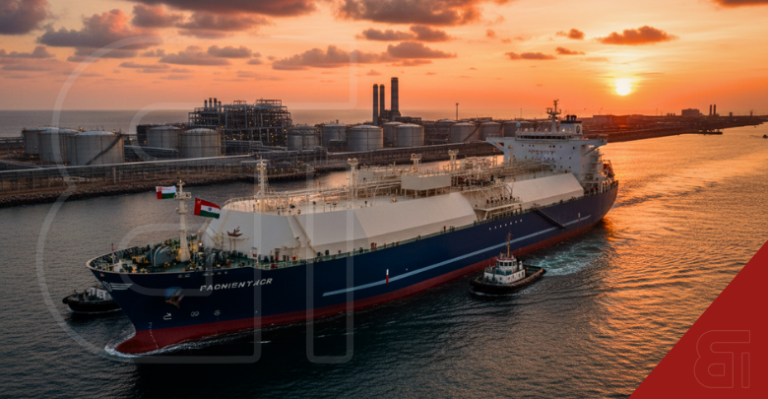
Indian buyers swiftly pivot to stable energy sources after Strait of Hormuz supply disruptions.
Oman becomes India’s leading LNG supplier as regional conflicts heavily disrupt Qatari gas exports.
Oman recently became the top supplier of liquefied natural gas to India. Consequently, this shift ended Qatar’s long-standing dominance. During March, regional conflicts severely disrupted gas production across the Gulf. Therefore, Indian buyers had to quickly find new energy sources.
As the world’s fourth-largest buyer, India imported 489,000 tonnes from Oman. This volume represented almost 30 per cent of its total monthly imports. Rating agency ICRA compiled these recent market figures.
Conversely, Qatari imports plummeted to merely 128,000 tonnes in March. Thus, the Gulf nation captured only an 8 per cent market share. This marks a drastic drop from its previous 41 per cent share. That earlier dominance lasted from April 2025 until February 2026.
This abrupt sourcing change followed missile strikes on Qatari energy facilities. Furthermore, shipping disruptions in the Strait of Hormuz crippled export capabilities. Qatar previously supplied over 40 per cent of India’s requirements. However, production halted at several Ras Laffan complex facilities.
Consequently, Indian gas companies scrambled to secure alternative energy shipments. Petronet LNG leadership noted that supplies are arriving from various nations. These include the US, Nigeria, Congo, Mauritania, and Senegal. Moreover, Oman’s geographic proximity provides a significant logistical advantage.
Tehran launched multiple strikes against Ras Laffan in mid-March. As a result, Qatar Energy officially declared force majeure on exports. Industry analysts expect Qatari operations to resume within a few weeks. Indian firms are actively negotiating to recover recently lost volumes.
Meanwhile, the US and Nigeria stepped up their supply efforts. They provided roughly 17 per cent of India’s March requirements. Specifically, they shipped 279,000 tonnes and 270,000 tonnes respectively. The UAE supplied 12 per cent of the monthly total.
Experts at ICRA believe Qatari facilities need weeks to normalise. India heavily relies on Oman and the US currently. They must sustain this strategy until the Strait of Hormuz reopens.
Previously, India imported 25.98 million tonnes between April 2025 and February. Qatar contributed 10.74 million tonnes during that period. The US and the UAE held 11 per cent shares each. Market watchers emphasise Oman’s unique geographic benefit today. Ultimately, its export facilities sit safely outside the restricted strait.
(Source: The Energy World)
To read more on Energy News (https://www.btabloid.com/category/energy/), head to the 🔗 link.


