
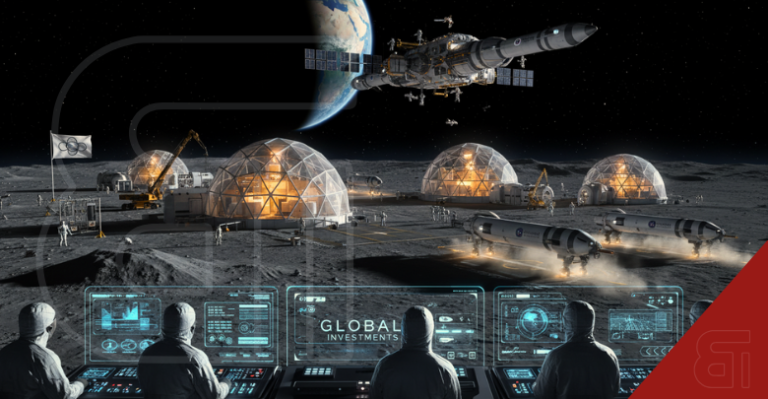
Rapid advancements in aerospace technology are accelerating plans for permanent lunar habitats and orbital infrastructure this decade.
The commercial space sector is rapidly advancing towards sustainable extraterrestrial habitation. Consequently, human settlements on the lunar surface could become a reality within this decade. Dylan Taylor leads Voyager Space as its chief executive officer.
He recently shared his ambitious projections at the CNBC CONVERGE LIVE event in Singapore. Taylor explained that inflatable habitats equipped with vital life support systems will likely emerge soon. Furthermore, he envisions a future where lunar activity becomes visible from Earth.
By the early 2030s, stargazers might witness illuminated moonbases from their own homes. Meanwhile, the broader lunar economy is preparing for an unprecedented financial boom. Global investment in low Earth orbit infrastructure is already surging dramatically.
For instance, funding reached $45 billion in 2025, which represents a massive increase from the previous year. Therefore, analysts eagerly anticipate upcoming financial moves from major aerospace competitors. Elon Musk recently confirmed that SpaceX intends to construct a self-sustaining lunar city.
This monumental project could theoretically materialise in fewer than ten years. Similarly, Blue Origin paused its suborbital tourism operations earlier this year. The company now entirely dedicates its resources to establishing a permanent lunar presence.
Government funding acts as a significant catalyst for this ongoing industrial expansion. Recently, the American political administration requested substantial increases in aerospace defence budgets. Authorities proposed over $300 billion for the 2027 fiscal year.
Consequently, innovative companies are developing crucial infrastructure to replace ageing orbital stations. Voyager Space launched its public offering in June to support its Starlab project. This modern orbital facility will replace the retiring International Space Station by 2030.
Political leaders also recognise the unifying power of these cosmic endeavours. Former Canadian Prime Minister Justin Trudeau praised the recent Artemis II mission. He noted that space exploration inspires global collaboration despite modern societal challenges.
Furthermore, technological capabilities in orbit are expanding far beyond simple habitation. Experts predict that space-based data centres will become fully operational shortly. However, engineers must first solve complex thermal radiation challenges in a vacuum environment.
Muon Space executive Gregory Smirin noted that orbital artificial intelligence analytics already exist today. Ultimately, humanity is steadily transforming the cosmos into a functional extension of Earth.
(Source: CNBC)
Read more on Technological News by heading to the 🔗 link.


