
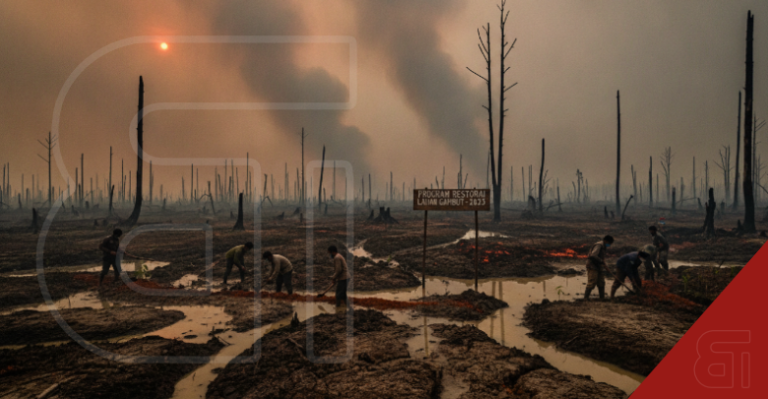
Restoring Peatlands a Top Priority as Toxic Smog Hits Hazardous Levels
Indonesia targets peatland restoration to combat its most severe wildfire and haze crisis in eleven years.
Indonesia is currently battling its most intense wildfire season in over a decade. Therefore, government officials are pointing to historical land degradation as the primary cause of these environmental disasters. Peatlands that once thrived now smoulder slowly beneath the earth’s surface. Consequently, toxic haze has blanketed major cities and drifted into several neighbouring countries.
Air pollution levels in some districts have recently peaked at nearly six times the hazardous limit. As a result, hundreds of thousands of citizens are suffering from serious respiratory illnesses. Deputy food minister Hanif Faisol Nurofiq identified previous agricultural projects as the main culprits. He stated that massive drainage efforts in the nineties fundamentally destroyed the ecosystem’s natural properties.
These interventions left the ground highly flammable after depleting vital water tables. However, the government now plans to rewet these areas by drilling new wells. Environmental organisations remain cautious about the success rate of such restoration programmes. Their latest research suggests that over half of damaged peatland is converted to oil palm plantations.
Meanwhile, local residents in Palangka Raya have staged protests against the current situation. They described how yellow skies have brought essential daily activities to a complete standstill this week. Everyone is now hoping for heavy rain to clear the thick orange smog.
(Source: Reuters)
Read more Climate Change News by clicking the 🔗 link.


