
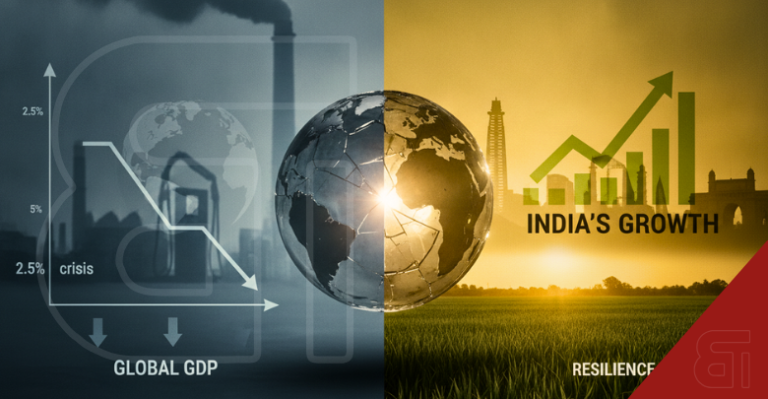
Global GDP expansion falls to 2.5% amidst energy crises, yet the Indian economy shows remarkable resilience.
The World Bank predicts a global economic slowdown, but India remains the fastest-growing major economy.
The global economic landscape faces mounting challenges from geopolitical tensions. The World Bank recently lowered its growth projections for 2026. The institution cited significant stress stemming from conflicts in the Middle East. Rising energy prices have created widespread market uncertainty.
Global growth will likely ease to 2.5% this year. This marks the weakest economic expansion since the pandemic. However, India remains a striking exception to this downward trend. The nation continues to hold its position as the fastest-growing major economy.
Financial experts expect India to achieve a 6.6% growth rate. This covers the fiscal year extending into 2027. Additionally, earlier projections estimated a robust 7% expansion during 2025. Analysts also anticipate sustained Indian growth exceeding 7% through 2028.
Meanwhile, global vulnerabilities threaten to further slow international progress. Severe energy supply disruptions could push global growth down to 1.3%. Financial markets remain highly susceptible to mounting external pressures. Iran’s involvement in ongoing conflicts continuously disrupts global energy markets.
The closure of the Strait of Hormuz directly escalated fuel costs. Consequently, surging gas and fertiliser prices raise serious concerns about food supply. The lender anticipates Brent crude oil will average $94 per barrel. This represents a substantial 36% increase from the previous year.
If oil prices reach $115, global inflation could hit 4.4%. Furthermore, international growth might slow to a mere 2.1%. The World Bank chief economist noted the fragile state of global markets. He stated that the global economy currently shows far less resilience than it did during previous crises.
Despite this gloomy international outlook, Indian domestic demand appears remarkably strong. Rural consumption holds steady while urban purchasing continues a steady recovery. Moreover, domestic sales tax collections consistently demonstrate positive upward trends. Higher input costs will eventually moderate this impressive private demand.
Experts suggest that fuel tax reductions could effectively support consumer spending. Lowering domestic goods and services taxes would also ease inflation. Additionally, reduced tariffs from the United States offer potential relief. Upcoming free trade agreements should offset weaker international export demands.
Nevertheless, rising subsidies will likely widen fiscal deficits across South Asia. Governments require these measures to cushion the blow of expensive energy. Therefore, India might offset tax revenue losses by reducing non-essential spending. Slower growth in capital expenditure will also balance these external pressures.
High energy import bills currently weaken external balances across the region. Reduced tourism revenues compound these regional economic challenges significantly. Developing economies generally face a sharp slowdown to 3.6% growth. Meanwhile, the euro area should see a modest 0.8% expansion.
Over the medium term, essential business environment reforms should support India. These strategic changes will inevitably attract more foreign direct investment.
(Source: Times Of India)
Read more on Global Ties News by heading to the 🔗 link.