A Future Run by Intelligent Machines
Imagine waking up on a beautiful Monday morning with a busy day at the office ahead of you, yet feeling surprisingly calm. Breakfast needs to be prepared for the kids and for yourself, and there is no maid to help. You are still not worried. You feel a bit jet-lagged after returning from a trip the previous day and do not feel like driving. Still, you remain unconcerned.
Why? Because everything around you runs smoothly and automatically. Intelligent systems handle your everyday tasks with minimal human involvement, and most of your problems seem to be taken care of for you.
Do you sense the presence of artificial intelligence here? Artificial intelligence is an advanced technology that enables computers and machines to perform tasks that typically require human intelligence, such as learning, reasoning, and problem-solving.
AI aims to capture human cognitive skills and perform equally remarkable tasks. All of this sounds wonderful. Who would not appreciate a helping hand for daily chores or a system that makes fewer mistakes than humans? It sounds exciting.
However, no matter how promising AI appears, is it always ethical to interfere with nature and reshape its mechanisms for our benefit? Is it wise to allow technology to surround us so completely that, in the end, little else remains? Should we risk letting it consume our attention to the point where we lose sight of what is morally right and what is ethically wrong?
Ethics and AI may seem like two sides of the same coin, and we must reflect on them carefully before artificial intelligence gains complete control over critical aspects of human life, leaving us feeling out of place in our own world. The thought itself is disturbing.
In today’s highly competitive world, people face intense pressure to succeed. Companies strive to recruit the best talent, hoping that strong teams will drive them to new heights. When many skilled professionals come together, they generate fresh ideas and complete tasks faster and more effectively.
Now imagine that experts design AI systems capable of performing, in minutes, the same amount of work that once required 10 people.
Designers build these systems to work quickly, deliver consistent results, and make fewer errors. However, there is a darker side. If automated systems gradually take over most tasks, what will remain for human workers? This shift could threaten millions of jobs. Some studies even suggest that automation may affect up to 800 million jobs worldwide by 2030.
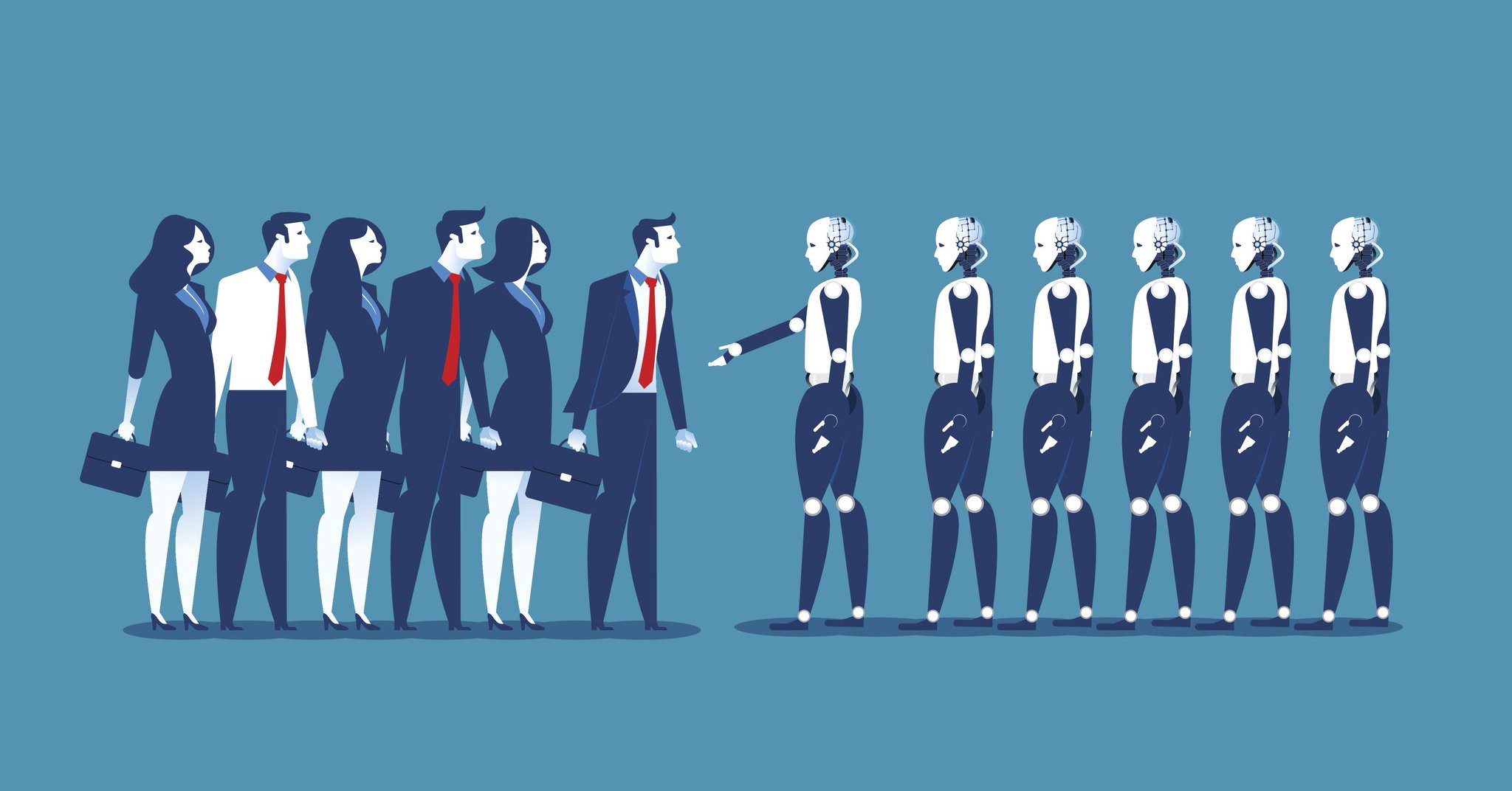
Job loss affects more than just income. It can strain families, lower self-confidence, and make people doubt their skills and value. As competition among humans increases, we may also find ourselves competing with machines for the same roles. That scenario is unsettling.
These systems will likely operate faster and more efficiently than humans. The central question is whether we are prepared to face this challenge. What began as a tool to assist us could easily become a dominant force that controls how we live and work.
This raises another major ethical concern. Today, many people follow a simple rule: work hard and earn your living. You contribute your skills and knowledge to an organisation and receive wages in return.
Now imagine a world dominated by AI-driven companies. Their need for human labour drops sharply, while their profits remain high. A smaller group of owners and investors would receive most of the revenue. Meanwhile, manual workers and low-skilled employees might struggle to find stable jobs and support their families.
This growing gap forces us to ask whether these intelligent systems are a boon or a threat to social equality.
Our lives also revolve around relationships. From parents and siblings to friends and partners, we depend on emotional bonds and work hard to maintain happy, healthy connections with the people we love.
Humans react and respond because we experience a wide range of emotions. Our days are filled with joy, laughter, anger, and sadness, all drawn from a rich emotional palette. Now imagine a robot stepping into this space.
While you are away from your grandmother, a social robot keeps her company, tells her stories, and helps her fall asleep at night.
Or picture a situation where your mother suddenly falls ill and no one else is at home. A medical assistant robot monitors her condition and administers basic treatment until help arrives. Will we reach a point where we speak to machines as naturally as we speak to one another? And if those machines prove more available, more patient, or more efficient, will they begin to shape deeper bonds than we expect?
Machines could care for older people, keep us company when we feel lonely, and satisfy our curiosity with information that a typical person might not know. Yet if they come between us and our loved ones, many of us would feel uneasy. No one wants to see meaningful human connections replaced by programmed interactions.
In the end, a machine remains a machine. It will act according to how humans design and instruct it. Human judgment, creativity, and empathy still shape how AI is built and used.
With responsible choices and strong ethical standards, people can ensure that artificial intelligence serves humanity rather than replaces it.
Hail humans—and the ethical choices that will shape the future of artificial intelligence.