
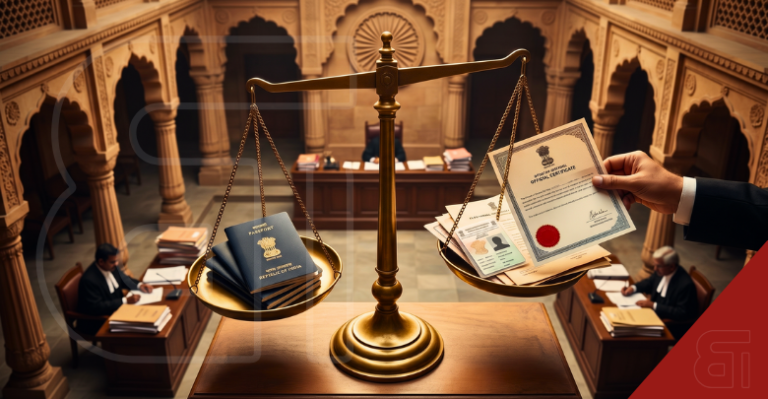
The Ministry of External Affairs clarifies the distinction between travel documents and legal citizenship amid electoral roll controversies.
MEA officials confirm that Indian passports are strictly travel documents, reigniting the debate over what constitutes valid proof of citizenship.
The definition of Indian citizenship faces renewed scrutiny. Officials at the Ministry of External Affairs recently addressed this complex issue. They stated that a passport functions strictly as a travel document. It cannot serve as definitive proof of citizenship. This clarification arrived during the annual Passport Seva Divas.
During the event, the ministry proudly shared its recent operational milestones. Authorities delivered nearly 1.5 crore passports and related services in 2025. They successfully issued about 1.47 crore chip-enabled passports. Processing times have also dropped to just five working days. However, these efficiency gains quickly overshadowed a pressing legal question.
The debate emerged after inquiries regarding electoral roll revisions. Citizens questioned their exclusion from the Election Commission’s special intensive revision. Many wondered if holding an Indian passport could establish their citizenship. An anonymous ministry representative subsequently clarified the government’s stance. They explained that passports merely attest to nationality during international travel.
Therefore, these documents do not legally guarantee citizenship status. Authorities only issue passports after conducting extensive due diligence. They must ensure every applicant legitimately qualifies for the document. Nevertheless, Indian law complicates the relationship between passports and citizenship. Section 6(2)(a) of the Passports Act mandates strict issuance rules.
Officials must actively refuse passports to individuals lacking Indian citizenship. Meanwhile, the government’s own manual describes the passport differently. It states that the document provides clear evidence of nationality. Yet, the Union government occasionally issues passports to non-nationals. Specific circumstances under Section 20 of the Act allow this practice.
For instance, Indian missions in Bangkok and Yangon hold delegated powers. They can issue documents to specified categories of Indian origin. Similarly, an Ahmedabad passport officer assists individuals returning from East Africa. Consequently, the Election Commission previously accepted passports for voter revision exercises. This acceptance caused significant confusion during recent legal challenges.
The Supreme Court recently reviewed petitions against the Bihar electoral revisions. During these hearings, the Election Commission clarified its stance on Aadhaar. They argued that Aadhaar establishes identity rather than legal citizenship. After all, authorities can issue Aadhaar cards to non-citizen residents. Ultimately, the Supreme Court upheld the intensive electoral revision exercise.
However, the court mandated the acceptance of Aadhaar for identity verification. Crucially, judges refused to treat it as absolute proof of citizenship. This judgment clearly separates identity verification from complex citizenship inquiries. Despite these rulings, the broader question of citizenship documentation remains unresolved. Last year, the Union Home Ministry avoided specifying which citizenship documents were acceptable.
Instead, the ministry directed attention to the Citizenship Act of 1955. This legislation outlines various established routes for acquiring legal citizenship. These pathways include birth, descent, registration, naturalisation, and territorial incorporation. Unfortunately, the Indian judiciary has yet to issue a definitive order. Courts consistently approach this sensitive issue from varying legal contexts.
In 2018, the Delhi High Court weighed in on a passport dispute. Judges treated the passport as a significant factor for nationality. Conversely, the Bombay High Court recently offered a different legal perspective. They observed that identity documents cannot independently resolve citizenship disputes. Therefore, authorities must evaluate these matters solely under the Citizenship Act.
(Source: The Wire IN)
Read more on Global Ties News by heading to the 🔗 link.