
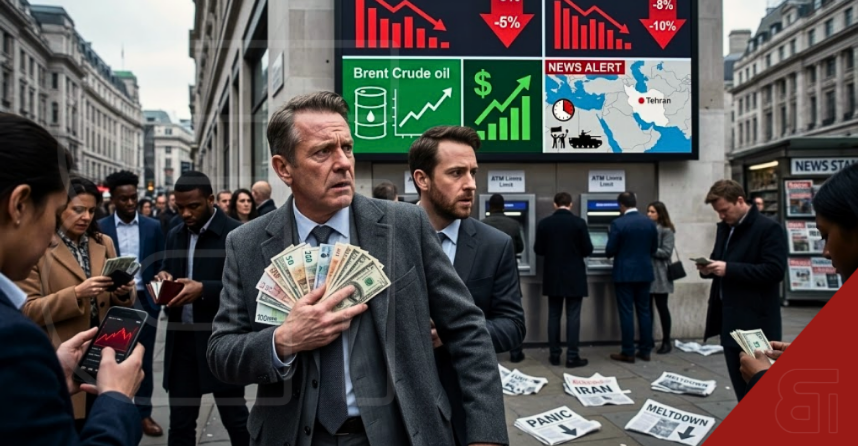
Escalating tensions in the Middle East have triggered a massive global sell-off, leaving investors scrambling for cash as traditional safe havens fall. (Reuters)
Cash rapidly became the ultimate asset in global markets this Tuesday. Specifically, an escalating conflict in the Middle East severely disrupted financial stability. Consequently, this turmoil dragged down gold, bonds, and stocks simultaneously. Therefore, the normal interplay between safe and riskier assets was completely upended. Furthermore, this sudden shift drove market volatility to concerning new heights.
Just a day earlier, market sentiment heavily relied on a swift resolution. However, the situation deteriorated drastically as Israel attacked Lebanon. Subsequently, Iran responded by striking critical energy infrastructure in Gulf countries. Additionally, tankers in the crucial Strait of Hormuz were also targeted. Notably, this strait facilitates the transit of a fifth of global energy.
Consequently, most major stock markets and Treasuries faced aggressive selling. Even traditional safe-haven assets like gold were not spared from the dump. Michael Arone from State Street Investment Management explained this phenomenon clearly. He stated that this is a classic response to events fraught with uncertainty. Furthermore, he noted that gold prices dropped by 4% after hitting recent highs.
According to Arone, this decline highlighted the indiscriminate nature of the current selling. He noticed that people currently want only oil and the dollar as assets. Indeed, Brent crude surged nearly 7% amidst the escalating regional chaos. Meanwhile, the US dollar achieved multi-month peaks against major global currencies. Additionally, data indicated retail investors are heavily piling into various oil stocks.
Simultaneously, bonds and stocks moved downwards in an unusual, synchronized manner. Wall Street’s primary indexes plummeted more than 2% during Tuesday’s trading session. Consequently, the S&P 500 reached its lowest point in over two months. Meanwhile, the two-year US Treasury yield climbed sharply to 3.599%. Analysts attribute this de-risking to previous complacency and extreme market positioning.
George Adcock from 36 South Capital Advisors offered historical context on this. He explained that during stressful periods, cross-asset volatility correlation tends towards one. Essentially, selling becomes contagious across sectors, breaking down protective inverse correlations. Consequently, LSEG Lipper data revealed massive inflows into global money market funds. These funds received $47.9 billion, the highest recorded since mid-February.
Conversely, investors rapidly reduced their exposure to global equities on Monday. They pulled $9.6 billion from US-focused funds and $9.1 billion globally. David Kelly of JP Morgan Asset Management noted an interesting flight to quality. He observed that the rallying dollar is not flowing into Treasury assets. Instead, this trend indicates a growing, urgent demand for short-term cash.
Aakash Doshi from State Street suggested that gold is being used for liquidity. He believes investors are selling gold to potentially offset immediate margin calls. Ultimately, during massive geopolitical shocks, cash remains the undisputed king. However, Kelly expects the dollar’s current rally might not be sustainable long-term. He warned that prolonged conflicts typically become negative for the US currency.
To read more on Finance News, head to the 🔗 link.


