
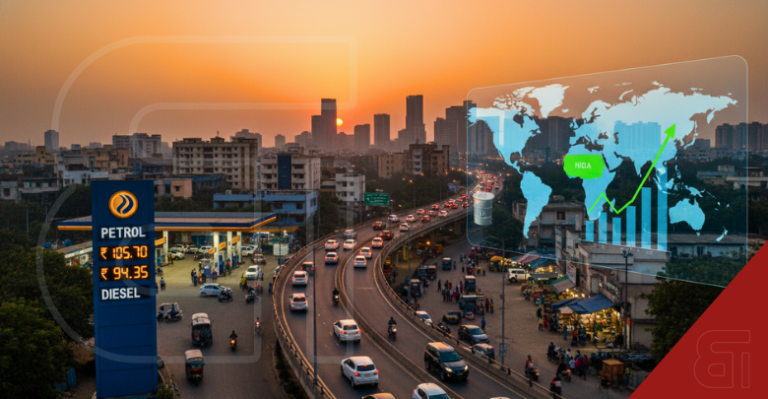
State-run oil companies adopt staggered price hikes to manage global crude surge.
Despite a recent Rs 7 hike, India’s petrol and diesel rates remain exceptionally low compared to global markets.
Public sector oil marketing companies have recently implemented staggered fuel price increases across India. Consequently, petrol and diesel costs have risen by over Rs 7 per litre within two weeks. This adjustment follows a prolonged freeze on retail rates amidst surging global crude oil prices. The conflict in West Asia has severely disrupted international energy markets.
However, India continues to maintain some of the lowest fuel prices globally. Analysts report that other major economies have transferred much steeper costs to their consumers. The European Union currently averages over Rs 179 for a litre of petrol. Furthermore, neighbouring nations like Sri Lanka and Pakistan retail petrol beyond Rs 135 per litre.
In Delhi, recent revisions pushed petrol to Rs 102.12 and diesel to Rs 95.20 per litre. Variations exist across states due to different local levies. Significantly, these calibrated increases aim to alleviate immense financial pressure on state-run retailers. Before this, companies faced immense daily under-recoveries nearing Rs 1,000 crore.
Global crude prices skyrocketed by more than 50% following the West Asia crisis. Consequently, the closure of the Strait of Hormuz severely impacted global supply chains. However, the government actively insulated domestic consumers by delaying retail hikes until mid-May. Policymakers deliberately chose a staggered approach to avoid sudden inflationary shocks.
Economists note that fuel costs directly influence the Consumer Price Index. Therefore, gradual adjustments help control freight, logistics, and overall sector input expenses. A senior bank economist previously estimated that these modest increases might minimally impact headline inflation. This careful strategy mirrors previous tactics used during global oil shocks.
The prolonged price freeze undoubtedly strained refiners like Indian Oil and Bharat Petroleum. Government officials projected massive potential losses if rates remained stagnant throughout the current quarter. Previously, late March excise duty cuts provided some relief but cost the exchequer heavily. Therefore, adjusting pump prices became an inevitable necessity to stabilise these crucial entities.
Meanwhile, India actively secures adequate crude volumes from non-Gulf suppliers to prevent shortages. Nevertheless, foreign exchange outflows remain a significant concern for the national economy. Consequently, leadership has urged citizens to conserve petroleum fuels wherever possible. Ultimately, this strategic balancing act protects both the economy and consumers from extreme volatility.
(Source: Indian Express)
Read more on Global Ties News by heading to the 🔗 link.