
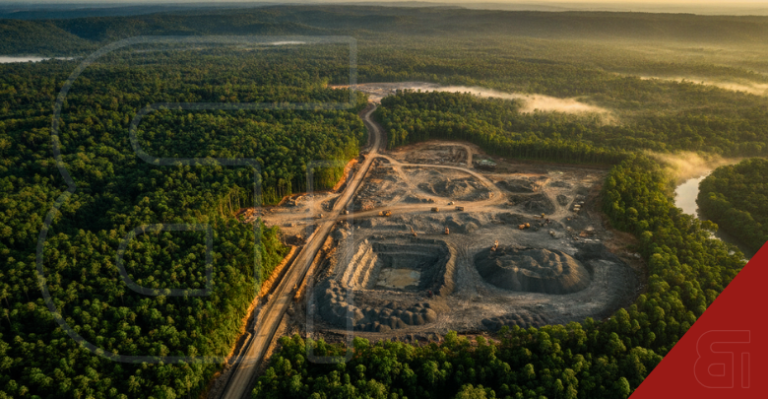
The Environment Ministry granted in-principle clearance for two coal blocks, diverting nearly 1,000 hectares of forest.
Two Adani-linked coal mining projects in Chhattisgarh recently received initial environmental clearance for massive forest diversion.
Balancing industrial expansion with ecological conservation remains a complex challenge for policymakers today. Recently, an Indian forestry panel approved a massive land diversion. Consequently, nearly 1,000 hectares of Chhattisgarh woodland may become mining sites. This decision impacts the resource-rich Raigarh district significantly.
The Environment Ministry advisory committee granted this initial clearance on July 7. Therefore, two separate coal extraction projects can proceed to their next phase. Both initiatives involve subsidiaries of the Adani Group. These entities will manage substantial operations in the region.
The first proposal concerns the Pelma open-cast mine. State-owned South Eastern Coalfields Limited originally oversaw this specific site. However, they signed an operational agreement with Pelma Collieries last year. This private operator functions as an Adani Enterprises subsidiary.
Developing this open-cast facility requires diverting over 360 hectares of woodland. Furthermore, workers will need to fell more than 52,000 trees. The targeted zone holds high conservation value due to dense vegetation. It also sits directly adjacent to the Kelo River.
The second initiative involves the Purunga underground coal block. Ambuja Cements Limited will lead this particular extraction effort. Consequently, they require the diversion of more than 620 hectares. This vast stretch of land currently serves as a vital habitat.
Committees noted the presence of wild elephants around the proposed areas. Therefore, local wildlife patterns might face considerable disruption soon. State officials justified the proposal during the recent meeting. Specifically, they explained that such site-specific mining lacks feasible alternative locations.
The underground nature of the Purunga project presents unique geological risks. Subterranean earth movements could stretch the ground surface horizontally. Thus, this tensile strain might deform the upper terrain by several millimetres. Such physical alterations demand careful monitoring and management.
The advisory committee outlined strict mitigation measures for these risks. State authorities must implement surface protection strategies immediately. Moreover, the project operators will bear all associated financial costs. Environmental safeguards remain a top priority for the panel.
Developers must restrict actual tree felling to a fraction of the land. This minimal clearing allows for essential surface infrastructure construction. Operators must fulfil compensatory afforestation requirements before receiving formal approval. Otherwise, authorities mandate monetary compensation if ecological damage exceeds predictions.
Coordinating with the state forest department is essential for these developers. They must execute comprehensive safety protocols if subsidence impacts forest cover. Ultimately, these stringent conditions aim to mitigate severe environmental degradation. Industrial progress must carefully navigate these vital ecological boundaries.
(Source: ET Energyworld)
To read more on Energy News, head to the 🔗 link.